
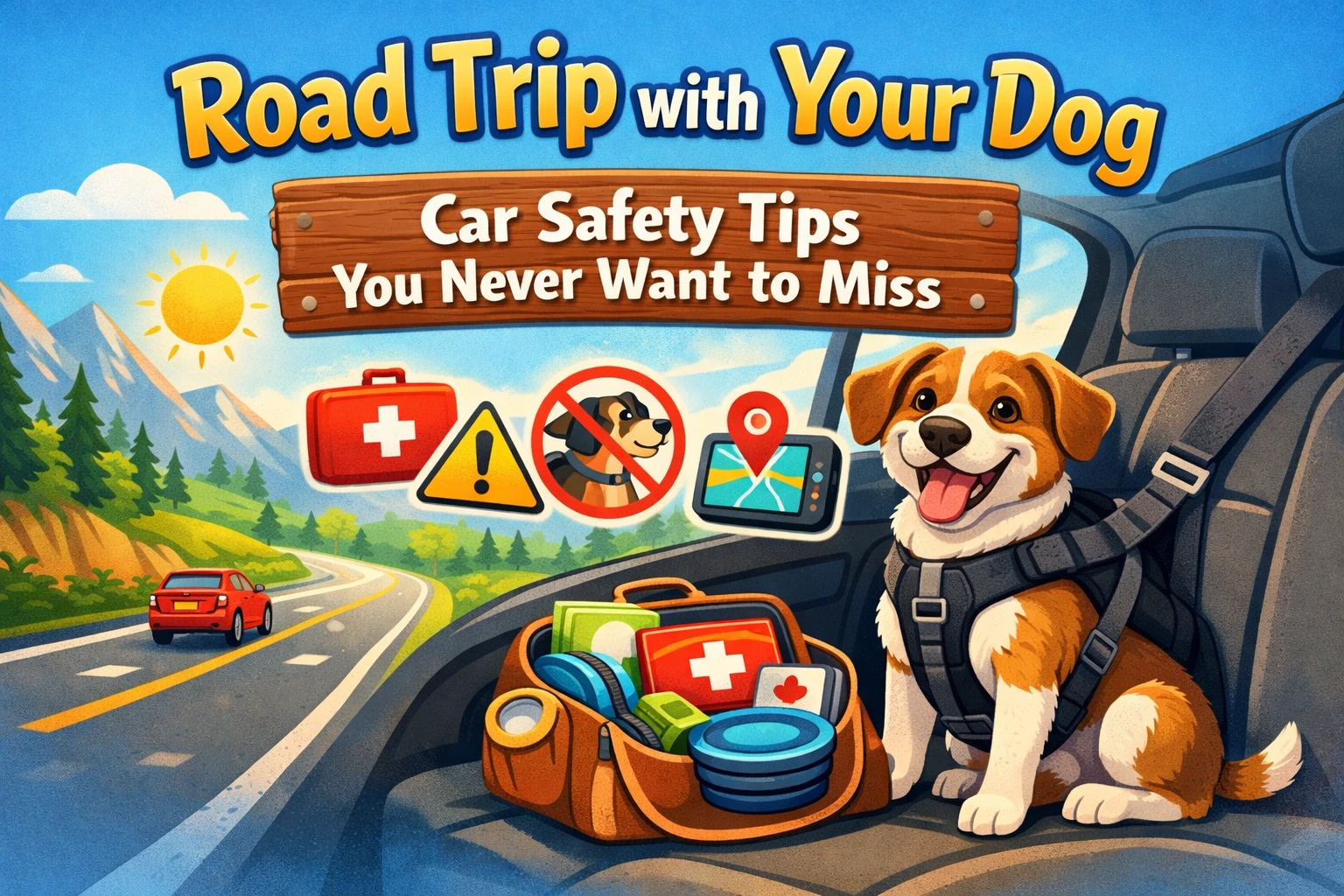
A road trip with your dog sounds easy. Grab the leash, toss a few things in a bag, and head out. Yet the car can turn risky fast. Sudden stops happen. Doors swing open. A loose dog can bolt, or climb into your lap at the worst time.
This guide stays practical. You will set up the car, prep your dog, pack the basics, and plan the drive so you reach your stop with fewer surprises.
Pick a safe place for your dog
Put your dog in the back seat, or in the cargo area of an SUV with a solid barrier. Skip the front seat. Airbags can hurt a dog. Even in a small crash.
Choose one safe setup and stick with it. Dogs relax more once the routine stays the same.
Seat belt harness setup
A crash-tested harness that clips into a seat belt keeps your dog from flying forward in a hard stop. It cuts down on roaming too, so you can focus on the road.
What to watch for:
- Use a harness built for car rides, not a walking-only harness.
- Clip into a seat belt or a fixed seat belt adapter.
- Keep the tether short. Your dog should not reach the front seats.
Crate setup
A crate works great for many dogs on longer drives. It keeps the space predictable. It can feel like a “home base” for anxious dogs too.
Aim for:
- The right size. Your dog should stand, turn, and lie down.
- A stable position. The crate should not slide around.
- Good airflow. Heavy blankets can block vents.
Barrier setup for cargo areas
A rigid barrier between the cargo area and the cabin helps with larger dogs. It keeps your dog out of your space and lowers distraction.
Pick a barrier that locks tight or bolts in. A loose barrier can shift under force.
What is the single biggest safety upgrade?
A crash-tested restraint system. Use a crash-tested harness with a seat belt, or use a secured crate. This one change reduces the biggest danger. A loose dog during a sudden stop.
Prep your dog before the long drive
A calm dog rides better. Start with health, comfort, and simple habits.
Health and ID check
Do this a few days ahead:
- Confirm your dog wears an ID tag with a current phone number.
- Check collar fit. Two fingers under the collar works for most dogs.
- Pack proof of rabies vaccine and any needed travel papers.
- Refill regular meds.
Dogs get lost more often during travel than at home. New places smell new. Doors open more than usual.
For more dog travel planning ideas, browse Pet Guides.
Practice rides
Short practice rides help a lot. Try a 5 minute loop, then 15, then 30. Keep the same restraint setup each time. Reward calm behavior after you park and open the door.
Motion sickness and meal timing
Some dogs drool, yawn, or vomit in the car. Feed a light meal a few hours before departure. Offer water, then keep big drinks for stop breaks.
Dogs with frequent nausea need a vet plan. Ask about travel-safe anti-nausea options that match your dog’s history.
Pack a simple dog car safety kit
Keep these items in one tote so you can grab it fast.
- Crash-tested harness or secured crate hardware
- Leash and backup leash
- Flat collar with ID tag
- Water and a spill resistant bowl
- Poop bags and paper towels
- Unscented wipes
- Old towel or small blanket for the seat
- Small trash bag for waste
- Treats for calm moments after stops
- Chew item that does not splinter
- Dog first aid kit
- A recent photo of your dog on your phone
A GPS device adds a nice extra layer of safety on trips. It helps during a door slip, a broken clip, or a panic run in a new area. Take a look at GPS Trackers.
Manage heat, airflow, and windows
Cars heat up fast. Even on mild days.
- Run the AC for a minute before loading your dog.
- Use sun shades on side windows in strong sun.
- Keep windows cracked only a little. A wide-open window invites a jump.
- Skip “head out the window.” Debris can hit eyes, and a hard stop can injure the neck.
Never leave your dog alone in a parked car. Not for a quick coffee. Not for a short checkout. Heat rises fast, and dogs overheat fast.
Plan stops that work for dogs and people
Long drives go smoother with routine stops. Many dogs settle once they learn the pattern.
A simple rhythm:
- Stop every 2 to 3 hours for water and a short walk.
- Clip the leash on before you open the door. Every time.
- Pick quieter corners of rest areas, away from traffic and crowds.
- Do a quick paw check. Salt, gravel, and hot pavement can cause pain.
Keep your dog secured during fueling. Gas stations feel intense for many dogs. Loud sounds and fast movement can trigger bolting.
Cut driver distraction
A loose dog creates chaos. Yet even a secured dog can distract you with barking, whining, or climbing.
Try these:
- Start the trip after a walk. A tired dog rests sooner.
- Give a safe chew for the first stretch.
- Keep toys simple. Skip squeakers.
- Put a towel or seat cover under your dog to reduce slipping.
Keep human snacks out of reach. Many dogs lunge for food, then the whole car gets busy.
Night driving and bad weather
Night drives bring glare and fatigue. Cold air can creep in near windows too.
- Keep a small light handy for leash clips at stops.
- Add reflective material on the collar or harness.
- Wipe wet paws before your dog climbs back in. Slips happen fast on a wet seat.
Rain and snow change footing at stops. Use a shorter leash and slow your pace.
After a crash or sudden stop
Even a minor impact can scare a dog into flight mode.
Do this in order:
- Speak in a steady voice.
- Secure your dog on leash before opening doors wide.
- Check for bleeding, limping, heavy panting, or glass on paws.
- Move to a safe spot, then call a vet clinic for next steps.
A dog can look “fine” and still feel pain. Watch for shaking, hiding, refusing food, or stiff movement later the same day.
Arrival safety at the destination
New places bring new risks. People carry bags in and out. Doors open a lot.
- Clip the leash before opening the car door.
- Scan for gaps in fences or open gates.
- Set up water and a safe resting spot right away.
- Keep your dog restrained during unpacking.
For real-world product picks and travel gear notes, check Reviews.
Quick checklist before you start the engine
- Dog secured with a crash-tested harness or a secured crate
- ID tag on collar, phone number current
- Water packed and reachable
- Leash ready before any door opens
- Cabin at a safe temp
- Route planned with stop points
A road trip with your dog can feel calm and simple. Focus on three things. Restraint. Heat control. Consistent stop habits. Get those right, and the rest turns into a routine you can trust.
